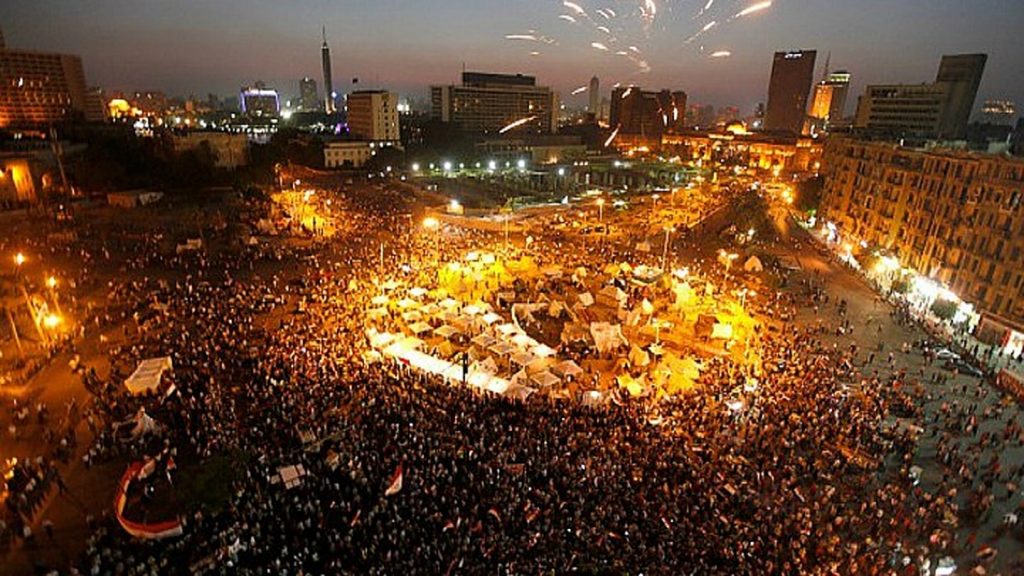
The self-immolation of Mohamed Bouazizi was the catalyst that ignited the Arab Spring, but the underlying conditions had been building for decades. Here is the context of the events leading up to and following December 17, 2010.
The Spark: Mohamed Bouazizi
On December 17, 2010, in the central Tunisian town of Sidi Bouzid, Mohamed Bouazizi, a 26-year-old street vendor, set himself on fire outside a local government office. This desperate act was a direct response to police confiscating his produce scales, the subsequent humiliation, and the refusal of local officials to hear his complaint.
Underlying Causes
Bouazizi’s act resonated instantly because it symbolized the shared frustrations of millions. The environment leading up to the uprisings was defined by three core pillars:
Economic Stagnation: High youth unemployment (particularly among university graduates), rising global food prices, low wages, and a rapidly growing youth demographic bulge with no economic prospects.
Political Repression: Decades of authoritarian rule under entrenched dictatorships. Citizens faced state police brutality, lack of freedom of speech, sham elections, and severe human rights abuses.
Systemic Corruption: Kleptocratic regimes where wealth was concentrated within the ruling elite and their inner circles. Ordinary citizens were forced to navigate a daily system of bribes and patronage just to survive.
The Jasmine Revolution (Tunisia)
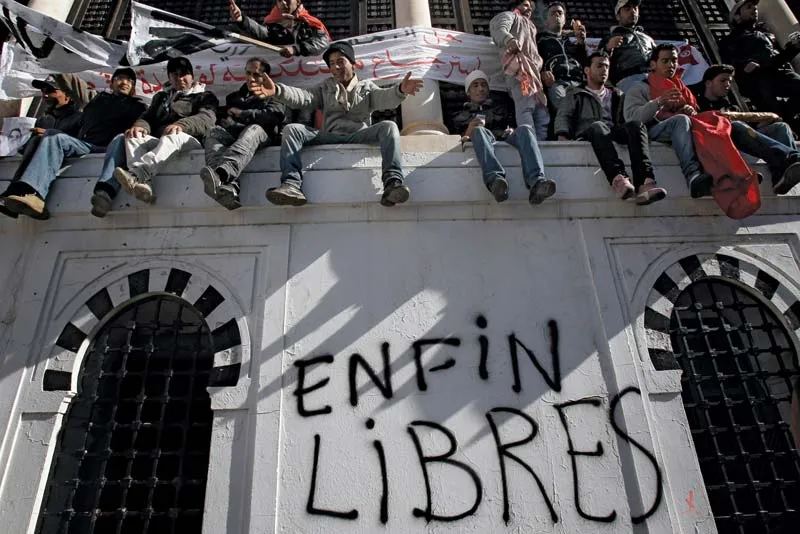
The ensuing protests in Tunisia—dubbed the “Jasmine Revolution”—escalated rapidly. They were uniquely fueled by social media networks and satellite broadcasters like Al Jazeera, which bypassed state-controlled media to share real-time footage of the crackdowns. The sheer volume of protests forced President Zine El Abidine Ben Ali, who had ruled for 23 years, to flee to Saudi Arabia on January 14, 2011.
The Arab Spring: The Ripple Effect
Tunisia’s success broke the barrier of fear across the region. Citizens in neighboring countries realized that heavily militarized regimes could be toppled by sustained popular mobilization. However, the trajectory of these uprisings varied drastically depending on military loyalties, foreign intervention, and sectarian divides.
Comparative Outcomes
| Country | Pre-2010 Leadership | Immediate Outcome (2011-2012) | Long-Term Result |
| Tunisia | Zine El Abidine Ben Ali | Ousted (Jan 2011) | Initial democratic transition, though currently facing institutional backsliding. |
| Egypt | Hosni Mubarak | Ousted (Feb 2011) | Brief democratic period; military coup (2013) led to a return to authoritarianism. |
| Libya | Muammar Gaddafi | Overthrown & killed (Oct 2011) | Fractured state, civil war, and competing governments. |
| Syria | Bashar al-Assad | Uprisings met with military force | Protracted civil war, massive refugee crisis; Assad remains in power. |
| Yemen | Ali Abdullah Saleh | Resigned (Feb 2012) | State collapse, proxy war, and severe humanitarian crisis. |
Leave a Reply